Why That First Sip After a Long Ride Hits Like Nothing Else on Earth
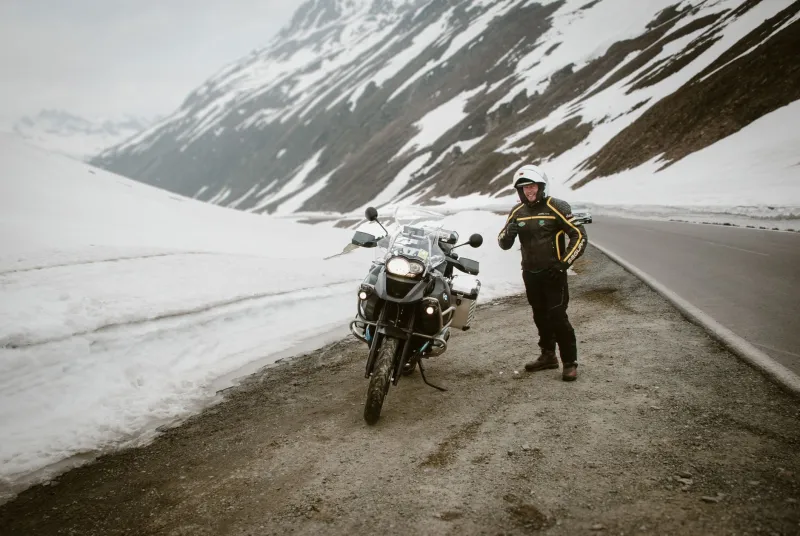
You've been on the bike for six hours. Your shoulders are tight, your hands have that low-grade vibration hum still going, and the sun has been hammering you since the Colorado foothills. You pull into a small-town taproom somewhere outside Salida, peel off your helmet, and order whatever's on draft. The bartender sets it down. You take one sip.
And it is, without exaggeration, the greatest thing you have ever tasted in your life.
This isn't just in your head — or rather, it is exactly in your head, but in ways that are far more interesting than simple gratitude. The physiological changes that a long motorcycle ride puts your body through are significant, measurable, and they fundamentally alter how your brain processes flavor. Understanding what's happening under the hood (yours, not the bike's) can actually help you make smarter choices about what you drink post-ride and when you drink it.
Your Body After a Long Haul
Let's start with the basics. Extended riding — anything over two or three hours — is a surprisingly physical experience. You're managing wind resistance, micro-correcting your balance constantly, processing a relentless stream of visual and auditory information, and often dealing with temperature swings, elevation changes, and the low-grade stress of navigating traffic or technical terrain.
All of that adds up. Your sympathetic nervous system — the fight-or-flight side — stays moderately activated for the duration of a ride. Adrenaline and cortisol are present in elevated levels. Your heart rate runs a bit higher than at rest. And critically, you lose a significant amount of fluid, even when it doesn't feel hot. Wind evaporates sweat almost instantly at highway speeds, which means most riders are meaningfully dehydrated by the time they stop — often without feeling particularly thirsty.
Dehydration alone is enough to change your taste perception. Research has consistently shown that even mild dehydration — around 1 to 2 percent of body weight in fluid loss — reduces saliva production, which directly affects how taste compounds dissolve and reach your taste receptors. Bitter flavors tend to become more pronounced. Sweet notes can flatten. The entire flavor landscape shifts.
The Altitude Factor
For riders who are hitting mountain passes — and if you're not, you're missing out — altitude adds another layer to the equation. At elevation, the lower air pressure and reduced humidity dry out the mucous membranes in your nose and throat. Since somewhere between 70 and 80 percent of what we perceive as "taste" is actually smell, anything that messes with your olfactory system is going to change your drinking experience in a real way.
This is actually well-documented in the airline industry, where researchers figured out years ago that passengers perceive flavors differently at cruising altitude. Tomato juice famously tastes better on a plane than on the ground. The same principle applies on a mountain road, just with better scenery and no recycled air.
Craft brewers who operate in high-altitude markets — think Colorado, Utah, New Mexico — have long accounted for this in their formulations. Some deliberately bump up hop aromatics or adjust carbonation levels knowing that the air and elevation will interact with the beer before it ever hits your lips. A brewmaster at a Front Range operation once told us that brewing for altitude is as much about anticipating the environment as it is about the recipe itself.
Adrenaline, Dopamine, and the Reward Circuit
Here's where it gets genuinely fascinating. The neurochemical cocktail your brain is running after a long ride creates an almost perfect setup for enhanced sensory reward. The sustained low-level adrenaline of riding, followed by the abrupt transition to stillness and safety, triggers a notable dopamine release. That's your brain's reward system lighting up in response to the contrast — the relief of stopping, the satisfaction of having covered ground, the physical pleasure of sitting down and unwinding.
Dopamine doesn't just make you feel good in a general sense. It actively enhances sensory perception. Flavors feel more vivid. Aromas seem sharper. The carbonation in a well-made IPA feels more alive on your tongue. You're not imagining it. Your brain is genuinely processing sensory input with more intensity in that post-ride window.
Neuroscientists who study reward processing have noted that contrast — the shift from a state of physical demand to one of rest — is one of the most reliable triggers for heightened hedonic response. In plain English: things feel better when you've earned them. Riding hard is, among other things, a very effective way to earn a drink.
What Distillers Know That You Might Not
Whiskey and spirits producers have a slightly different perspective on the post-ride palate. Distillers who cater to the outdoor and adventure crowd — and there are more of them every year — have started thinking carefully about how their products perform in field conditions rather than just at a tasting bar.
A craft distiller based in Tennessee who makes a bourbon specifically marketed to outdoor enthusiasts told us that he thinks about "activation energy" when developing flavor profiles. The idea is that a spirit meant to be enjoyed after physical exertion needs to lead with warmth and sweetness rather than complexity, because a fatigued palate picks up broad strokes first. The nuanced notes — the vanilla finish, the subtle rye spice — come through better once you've had a few minutes to settle and rehydrate slightly.
His advice: don't crack the good stuff the moment you dismount. Give yourself ten minutes, drink some water, let your heart rate normalize. Then pour. The difference in what you taste, he argues, is substantial.
Practical Tips for Maximizing the Post-Ride Pour
So what does all of this mean practically? A few things worth keeping in mind:
Hydrate before you sip. This isn't a lecture — it's flavor advice. Getting some water into your system before your first beer or cocktail will literally make it taste better. Your saliva production recovers quickly, and with it, your taste sensitivity.
Let your nervous system downshift. Sit for a few minutes. Take your gear off. Breathe. The dopamine reward hits harder when you're actually at rest, not still mentally on the road.
Match the drink to the moment. After a hot, dusty run through the desert Southwest, a crisp lager or a light wheat beer is going to land better than a heavy imperial stout. Your body is craving refreshment, and fighting that instinct with something dense and boozy is working against your own biology.
Pay attention to aroma. Because your olfactory system has been blasted by wind and exhaust all day, it's actually somewhat sensitized by the time you stop. Swirl, sniff, take your time. You might notice things in a familiar beer or spirit that you've never picked up before.
Respect the altitude. If you've been climbing, your palate is running in a different mode. Hop-forward beers and aromatic spirits tend to express themselves more intensely at elevation. Order accordingly.
The Earned Drink
There's a reason the cold beer at the end of a hard ride has become something close to ritual in motorcycle culture. It's not just habit or thirst. It's the intersection of biology, neurochemistry, and the very human satisfaction of having done something physical and real with your day.
The road changes you in small ways every time you ride it. Turns out, it changes the way you drink, too.