Roots, Bark, and Botanicals: How Craft Bitters Are Quietly Revolutionizing the Rider's Recovery Routine
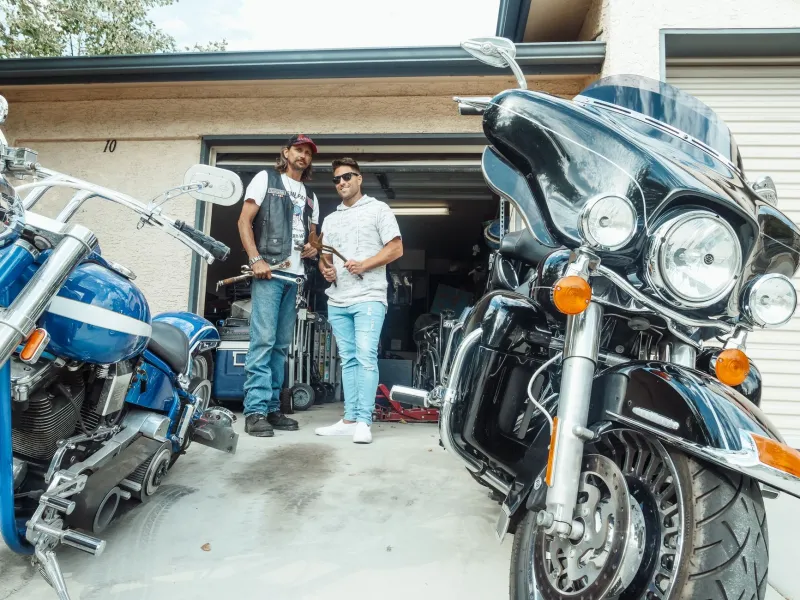
Spend enough time in the saddle and your body starts keeping receipts. A long day through the Ozarks or a hard push down the Blue Ridge Parkway leaves behind more than good memories — it leaves tight shoulders, a stiff lower back, vibration fatigue in your hands, and a particular kind of mental depletion that sleep alone doesn't always fix. Riders have been managing that toll for as long as motorcycles have existed, mostly with whatever was available: aspirin, a cold beer, a hot shower, and a good night's sleep.
But something is shifting. Across the country, a quieter, more intentional approach to recovery is gaining traction in riding communities — one that draws from a tradition far older than the motorcycle itself. Craft bitters, herbal liqueurs, and botanical spirits are showing up in garage fridges and saddlebag kits, not just as a nightcap but as a deliberate part of how riders take care of themselves after a hard day on the road.
The Old Medicine Cabinet Gets a New Address
Bitters aren't new. They predate the cocktail by centuries, originally developed as digestive tonics and medicinal preparations in European apothecary traditions. Gentian root, wormwood, dandelion, angelica, chamomile, valerian — these weren't chosen for flavor alone. They were chosen because they worked, at least by the standards of the time, for settling stomachs, easing tension, and promoting sleep.
What's new is the craft distilling movement bringing genuine intention back to those formulas. Small-batch producers across the US are revisiting historical recipes, working with herbalists and foragers, and creating products that sit somewhere between culinary ingredient and functional supplement.
Take Colorado-based Hummingbird Bitters, whose founder spent three years studying traditional Appalachian herbal medicine before launching a line specifically designed around physical recovery. Or Ironroot Republic in Texas, whose botanical spirits lean heavily on local roots and barks with documented anti-inflammatory properties. These aren't novelty products dressed up in apothecary-style bottles. The people behind them are asking real questions about what the body needs and whether a well-crafted botanical preparation can help deliver it.
What the Science Actually Says
Here's where it gets complicated — and worth being honest about.
Dr. Mara Castellano, a sports physiologist based in Asheville, North Carolina, who works with endurance athletes and has consulted informally with several long-distance riding communities, puts it plainly: "The research on specific botanicals is genuinely mixed. Some compounds — certain adaptogenic herbs, bitter digestive tonics, even low-dose alcohol as a vasodilator — have real physiological effects. Others are mostly folklore dressed up in modern marketing language. The challenge is knowing which is which."
That said, she's not dismissive of the trend. "Riders deal with a specific combination of stressors — prolonged vibration, sustained isometric muscle tension, wind and temperature exposure, plus significant cognitive load from traffic and navigation. That's a real physical burden. If someone is replacing three ibuprofen and two beers with a small pour of a well-made herbal bitter and an intentional wind-down ritual, that's probably a net positive, even if the botanical claims are only partially supported."
The key word there is ritual. Multiple researchers studying recovery in endurance sports have noted that the intentionality of a recovery practice — the act of consciously transitioning out of performance mode — has measurable benefits independent of the specific intervention. A thoughtfully prepared glass of something botanical, sipped slowly and deliberately, might do more work through its ritual structure than through its ingredient list.
The Distillers Paying Attention
Some craft producers are doing more than borrowing old apothecary aesthetics. They're actively engaging with the riding community to understand what riders need.
Jake Merritt, co-founder of Thornwood Botanical Works in western Montana, got into the business after a decade of serious adventure riding left him looking for better recovery options. "I was watching what serious cyclists and trail runners were doing with adaptogens and functional herbs, and I thought — why isn't anyone doing this thoughtfully for riders? We have the same issues. Longer exposure times, usually, and a lot more vibration stress."
Thornwood's flagship product is a low-ABV herbal bitter built around ashwagandha, skullcap, and gentian, designed to be taken as a small digestif — enough to trigger the parasympathetic nervous system response associated with true relaxation without tipping into territory that impairs next-morning performance. "We're not selling a party product," Merritt says. "We're selling a transition. From on to off. From alert to recovered."
That framing resonates with riders who take both their riding and their recovery seriously. The craft beverage world has spent years building credibility around quality and intentionality. Applying that same lens to the functional side of what we drink feels like a natural evolution.
Building Your Own Recovery Stack
If you're curious about incorporating botanical spirits or bitters into your post-ride routine, a few practical thoughts:
Less is more, always. The goal is a small, intentional pour — a digestif measure, not a nightcap pour. Most of the functional botanicals in quality bitters are active in small doses, and the ritual value doesn't require volume.
Time it right. Most riders who use this approach do so about an hour after arriving home, after hydrating, eating something real, and ideally doing some basic stretching. The botanical bitter becomes part of a broader wind-down sequence, not a standalone fix.
Know what you're buying. Look for producers who are transparent about their botanical sourcing and formulas. The craft bitters market has real quality variation. A producer who can tell you exactly what's in their product and why is worth your trust and your money.
This isn't a substitute for actual recovery. Sleep, hydration, food, and movement are non-negotiable. Botanical spirits can complement a solid recovery practice. They can't replace one.
A Different Kind of Nightcap
There's something fitting about the motorcycle community rediscovering a tradition this old. Riders have always been drawn to things that are authentic, functional, and slightly outside the mainstream. A well-made herbal bitter, produced by someone who actually knows what they're doing with a root and a still, fits that sensibility perfectly.
It's not magic. It's not a cure. But as part of a deliberate approach to taking care of yourself after hard miles — alongside sleep and water and honest food — it's a ritual worth considering. Ride hard, yes. But recover like you mean to ride again tomorrow.