What's in Your Tank? The Surprisingly Deep Connection Between Fuel Grades and Fine Spirits
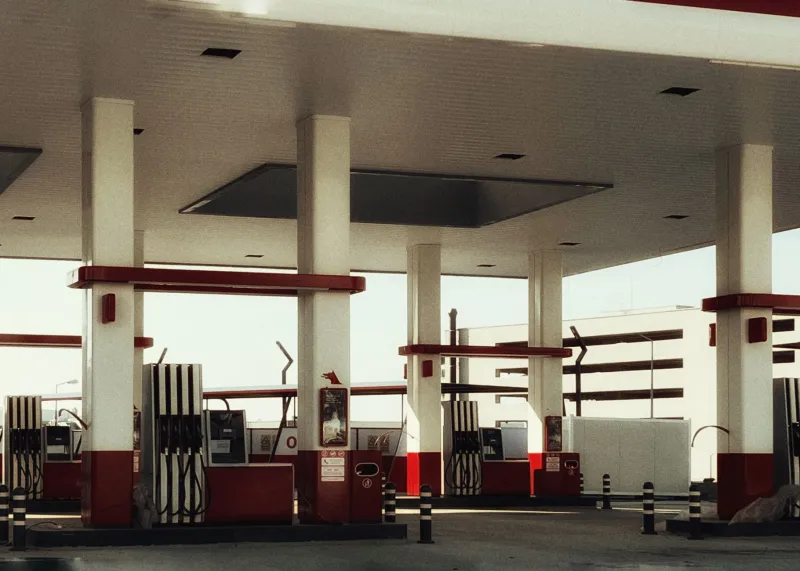
Stand at a gas pump long enough and you start to notice something. Regular, mid-grade, premium. Three choices. Most people grab regular without thinking twice, jam the nozzle in, and stare at their phones until the tank's full. But riders who've spent real time tuning a high-compression engine know those numbers matter. A lot. And if you've ever stood in front of a wall of bourbon at a well-stocked liquor store, you've faced a strikingly similar decision — and probably felt the same kind of quiet pressure to make the right call.
Turns out, the science behind fuel grades and the grading systems used in whiskey, bourbon, and craft spirits have more in common than a casual glance would suggest. Both are about refinement. Both reward obsession. And both have a way of separating the people who really care from the ones who are just along for the ride.
The Numbers Game
Octane ratings measure a fuel's resistance to knocking — that rattling, pinging combustion that happens when fuel ignites before the spark plug fires. Higher octane means the fuel can handle more compression before igniting, which is exactly what high-performance engines need. A standard 87-octane fill-up in a stock commuter bike is perfectly fine. Drop that same 87 into a high-compression sport engine or a finely tuned custom build, and you're asking for trouble.
Proof ratings in spirits work on a parallel logic. In the US, proof is simply double the alcohol by volume — so an 80-proof bourbon sits at 40% ABV. But here's where it gets interesting: just like octane, proof isn't just a number. It reflects how the spirit was distilled, how it was managed through the process, and — critically — what the distiller was trying to achieve. Higher proof spirits carry more of the raw distillate character. They're less filtered by water, more intense, and they demand more from the drinker. Sound familiar?
A rider who insists on 93 octane for their bike isn't being precious. They're matching the fuel to the machine's requirements. A bartender who reaches for a cask-strength bourbon at 120 proof isn't showing off. They're choosing a spirit that delivers the full, uncut experience the distiller intended.
Refinement Is a Process, Not a Price Tag
Here's where things get genuinely interesting. Premium fuel isn't just regular gas with extra attitude — it goes through additional refining processes that reduce impurities and improve combustion stability. The refinery is doing careful, deliberate work to produce something that performs better under pressure.
Craft distillers will tell you the same story. The difference between a bottom-shelf whiskey and a craft single barrel expression often comes down to the number of distillation passes, the quality of the grain bill, and the precision of the cut points — the moment the distiller separates the desirable "heart" of the run from the "heads" and "tails" that carry off-flavors and impurities. It's a refinement process. You're removing the rough edges to get to the clean, high-performing core.
A master distiller making those cut decisions is doing something not entirely unlike an engineer dialing in fuel injection timing. Both are chasing optimal performance. Both are managing combustion, in their own way.
Aging, Char, and the Long Game
Premium fuel also contains additive packages — detergents and stabilizers that keep engines cleaner over time and prevent deposit buildup. The benefits aren't always immediate. They accumulate. You don't feel the difference after one tank; you feel it after ten thousand miles when your valves are still clean and your engine is still running tight.
Barrel aging in whiskey works on the same slow logic. When a distiller chars the inside of a new oak barrel, they're creating a natural filtration layer — the char absorbs sulfur compounds and other harsh elements from the raw spirit while the wood's sugars slowly caramelize and leach into the liquid. The longer the spirit sits, the more the barrel does its work. A two-year bourbon is rough around the edges. An eight-year expression from the same distillery might be silky, complex, and entirely transformed.
Both processes require patience and faith. You're investing in something you can't fully evaluate until time has done its job. Any rider who's broken in a new engine properly — keeping the RPMs varied, not pushing hard in the first thousand miles — understands this instinctively. You build toward performance. You don't just demand it on day one.
What Riders Know That Most People Don't
There's a culture of specification obsession in the motorcycle world that doesn't always get the credit it deserves. Riders read owner's manuals. They argue about synthetic versus conventional oil at dinner. They know their compression ratios. They track fuel economy across different fill-ups and notice when something's off. This isn't nerdiness for its own sake — it's the natural result of being intimately connected to a machine that will absolutely let you know when something isn't right.
Craft spirit enthusiasts operate in the same headspace. They read the back label. They notice the mash bill percentages. They ask whether a bourbon was aged in a rickhouse with temperature control or exposed to the full swing of Kentucky seasons. They care about entry proof — the strength at which a spirit enters the barrel — because it directly affects how the wood interacts with the liquid over time.
In both worlds, caring about the details isn't pretension. It's respect for the craft.
Two Pumps, One Philosophy
Next time you pull up to a gas station on a long ride, take a second before you default to whatever's cheapest. Ask yourself what your engine actually needs. Then later, when you're winding down at a bar or a brewery somewhere off the main highway, give the spirit list the same consideration. Look at the proof. Ask about the aging. Think about what went into getting that liquid from raw grain to glass.
The obsession with quality that makes you a better rider is the exact same obsession that makes you a better drinker. The machines are different. The principle is identical. Fuel your ride right. Fuel yourself the same way.
At Bikes & Barrels, that's not just a lifestyle — it's a standard.