Lean, Pour, Repeat: The Hidden Science Connecting Cornering Physics to Craft Beer Foam
Most riders don't think about physics when they're carving through a canyon road. And most craft beer drinkers aren't running fluid dynamics equations when the bartender sets a perfectly foamed pint in front of them. But here's the thing — both experiences are governed by the exact same underlying science. Aerodynamics, pressure differentials, viscosity, surface tension. These aren't just textbook terms. They're the invisible architecture behind two of the most satisfying sensations a person can have on a Tuesday afternoon.
Let's break it down.
The Corner and the Pour: Two Expressions of the Same Force
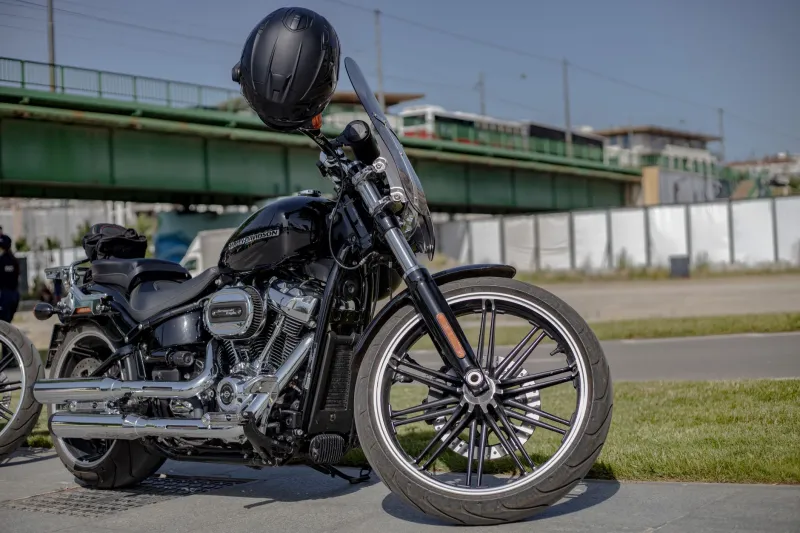
When a rider leans into a curve, they're negotiating a relationship between centripetal force, gravitational pull, and tire contact patch dynamics. The bike wants to go straight. Physics says it has to arc. The rider's job is to find the line where all those competing forces settle into something that feels almost effortless — that sweet spot where the machine and the road are having a conversation, not an argument.
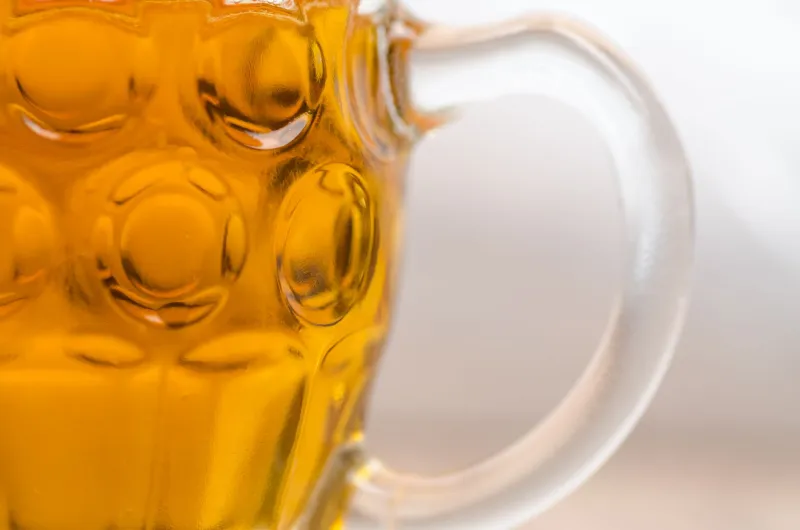
Now consider what happens when a brewer carbonates a batch of beer. CO2 dissolves into the liquid under pressure. When that pressure releases — say, when the tap opens or the can cracks — dissolved gas rushes toward nucleation points, tiny imperfections on the glass surface or in the liquid itself, and forms bubbles. Those bubbles rise, collide, merge, and eventually create that foamy head sitting on top of your pour. The brewer's job is to engineer that process so it's controlled, consistent, and beautiful.
In both cases, you're managing competing forces toward a desired outcome. You're negotiating with physics, not fighting it.
Viscosity Is Everything
Ask any experienced rider why tire compound matters and they'll talk about grip, heat cycles, and contact patch behavior. What they're really describing — without necessarily using the term — is viscosity and surface interaction. A tire's rubber compound flows microscopically into asphalt texture under load and heat. That micro-flow is what creates grip. Change the compound, change the viscosity behavior, and your whole handling profile shifts.
Beer has its own viscosity story. Heavier, maltier styles like stouts and porters have a higher viscosity than light lagers. That thickness affects how carbonation bubbles form and travel through the liquid, how the foam head builds and holds, and how the beer coats your palate. Brewers obsess over this. They adjust mash temperatures, fermentation durations, and adjunct additions specifically to hit a target viscosity that supports the drinking experience they want to create.
A session IPA and a nitro stout behave completely differently in the glass for the same reason a sport bike and a cruiser handle differently on the same road. The physics is identical. The tuning is everything.
Pressure, Turbulence, and the Art of the Setup
In aerodynamics, turbulent airflow is the enemy of stability. Riders and designers spend enormous effort trying to move air cleanly around a motorcycle — fairings, windscreens, and frame geometry all exist partly to manage the boundary layer of air that clings to the bike at speed. Disrupt that layer and you get instability, wobble, drag. Keep it smooth and the bike tracks true.
Foam science in brewing has an almost identical concept called laminar versus turbulent pour dynamics. When beer flows through a tap at the right pressure and angle, the liquid moves in smooth, parallel layers — laminar flow — and the resulting foam is creamy, dense, and stable. Crack the pressure too high or angle the glass wrong and you get turbulent flow: chaotic, oversized bubbles that collapse quickly and leave you with a flat, sad pint inside of two minutes.
Craft breweries that serve beer on draft spend serious time dialing in their tap systems — line length, glycol temperature, CO2 pressure, faucet type — the same way a suspension tuner spends hours getting spring rates and damping curves dialed for a specific rider on a specific track. It's obsessive. It's technical. And when it's right, you feel it immediately.
The Rider's Line and the Brewer's Recipe: Precision as a Practice
There's a concept in performance riding called the geometric line versus the late apex line. The geometric line is the mathematically shortest path through a corner. The late apex line sacrifices some entry speed to open up the exit, letting the rider accelerate harder and earlier coming out. It's counterintuitive until you understand the physics — and then it becomes second nature.
Brewing has its own version of this. The obvious move when you want a more bitter beer is to add more hops. But experienced brewmasters often approach bitterness from unexpected angles: adjusting water chemistry to change how hop compounds bond with the wort, timing dry hop additions to specific fermentation stages, or manipulating pH levels to sharpen or soften perceived bitterness. The result you're chasing isn't achieved the obvious way. It's achieved through a deeper understanding of how all the variables interact.
Both disciplines reward the practitioner who's willing to go beyond surface-level adjustments and really learn the system. That's what separates a good rider from a great one. Same goes for a decent brewer versus a genuinely exceptional one.
Why This Matters to the Bikes & Barrels Crowd
We're not writing this to turn riders into physicists or brewers into engineers. The point is simpler and maybe more satisfying than that: the instinct that drives someone to obsess over suspension geometry and tire pressure is the same instinct that makes a craft brewer lose sleep over carbonation volumes and head retention. It's a love of mastery. A need to understand why something works, not just that it works.
Riders who spend their weekends chasing the perfect line through a set of esses and their evenings chasing the perfect pint at a local taproom aren't living two separate lives. They're living one very consistent life — one organized around the pursuit of a thing done exactly right.
The physics connects them whether they know it or not. The culture connects them whether they planned it or not.
Next time you're mid-corner, feeling the bike load up and settle into the arc, think about that pint waiting at the end of the ride. Same forces. Same precision. Same reward.
Ride hard. Pour carefully. The science is on your side.