Curves, Casks, and Open Country: Planning the Perfect Distillery-Hopping Motorcycle Journey
There's a moment — you've probably felt it — somewhere around mile 200, the asphalt twisting ahead of you like it's trying to escape, when you realize this is exactly what living is supposed to feel like. Now imagine that same moment, followed an hour later by a small-batch bourbon poured by the guy who actually made it, in a tasting room built inside a converted grain barn. That's not a fantasy. That's a trip you can actually plan. And more riders are doing exactly that.
Across the United States, a genuine movement is taking shape at the intersection of motorcycle culture and the craft spirits boom. Call it the ultimate pairing: legendary roads meeting hand-crafted pours, one state line at a time.
Why This Trend Is Exploding Right Now
The timing makes a lot of sense when you think about it. The American craft distillery scene has absolutely detonated over the last decade — there are now more than 2,200 craft distilleries operating in the US, up from fewer than 100 in the early 2000s. Meanwhile, motorcycle touring has seen a serious renaissance, with riders increasingly seeking out experiences over destinations. Put those two cultural forces together and you get a Venn diagram with a very sweet spot in the middle.
Riders who've done these trips describe something almost alchemical about the combination. The physical intensity of a great riding road — the focus it demands, the sensory overload of wind and lean and throttle — makes the eventual stillness of a tasting room feel profoundly earned. Your palate is sharper. Your appreciation is deeper. That first sip genuinely means something.
"After a solid four-hour run through mountain switchbacks, I'm not just tasting bourbon," says Marcus Delray, a touring rider from Asheville, North Carolina who has completed three dedicated distillery routes. "I'm tasting it with every nerve ending I've got. Nothing compares."
The Blueprint Route: Tail of the Dragon Into Tennessee Whiskey Country
If you want a starting point that needs zero justification, look southeast. The combination of Deals Gap — home to the legendary Tail of the Dragon with its 318 curves in 11 miles — and the sprawling whiskey culture of East and Middle Tennessee is essentially purpose-built for this kind of trip.
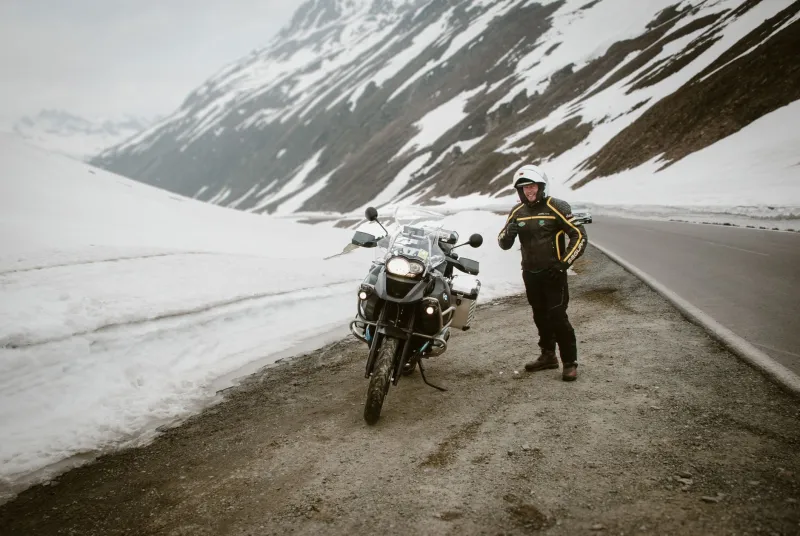
Ride the Dragon early in the morning when traffic is light and the mountain mist is still hanging over the Smokies. From there, head west toward Gatlinburg and pick up US-321 south toward Maryville before eventually pointing yourself toward Lynchburg and the surrounding distillery corridor. Ole Smoky in Gatlinburg is a natural first stop given its proximity to the ride. Then work your way deeper into Tennessee whiskey territory, where craft operations like Short Mountain Distillery in Woodbury and Nelson's Green Brier in Nashville reward the extra miles with genuinely exceptional product and facilities that feel like they were designed for people who appreciate the journey as much as the destination.
Plan for two to three days minimum. This is not a trip you rush.
Mapping Your Own Route: The Practical Framework
The Dragon-to-Tennessee corridor is just one template. The real beauty of this approach is how well it scales to almost any region. Here's the basic framework that experienced distillery-route riders swear by:
Anchor the ride around the road, not the destination. Start with the motorcycle route — the Blue Ridge Parkway, Highway 1 along the California coast, the Going-to-the-Sun Road corridor in Montana — and then research what's pouring within reasonable range. You're building a route that serves the riding first. The distilleries are the reward, not the reason.
Cap your daily tasting stops at two, maximum. This is the non-negotiable safety rule that every experienced rider on this circuit will tell you without prompting. One distillery mid-afternoon, one in the evening after you've parked for the night. Craft distilleries typically offer generous pours, and mountain roads do not forgive impaired judgment. Full stop.
Book lodging near the final stop of the day, not between stops. You want a place to stay that's walking distance or a very short ride from where you plan to spend your evening. Many craft distilleries in rural areas have relationships with nearby B&Bs, lodges, or even campgrounds. Ask when you call ahead.
Call ahead. Always. Hours at small-batch operations can be irregular, especially on weekdays. A quick call confirms availability, and honestly, distillers love knowing a group of riders is coming. More than once, that phone call has turned into a private tour.
Routes Worth Adding to Your List
Beyond Tennessee, a few corridors are generating serious buzz in the touring community right now:
The Kentucky Bourbon Trail by Motorcycle — US-60 and the surrounding backroads through the Bluegrass region pair beautifully with the density of distilleries here. Makers Mark, Wild Turkey, and dozens of craft operations are all within a compact geography. The roads are rolling and smooth. This is an approachable, manageable route for riders newer to distillery touring.
The Oregon Coast and Willamette Valley Loop — Combine the dramatic coastal riding of US-101 with an inland swing through wine and spirits country. Oregon's craft distillery scene is legitimately excellent and wildly underrated by riders from east of the Rockies.
The Texas Hill Country Circuit — Fredericksburg and the surrounding region has quietly become one of the most interesting spirits destinations in the country, and the Hill Country roads — FM 337, the Devil's Backbone stretch of RR 32 — are genuinely world-class riding. The combination is almost criminally good.
The Gear That Makes It Work
A few practical additions make the distillery-hopping format work better on the road. A quality insulated bag that straps to your luggage system is worth its weight — most distilleries sell bottles, and you'll want to bring some home in one piece. A small tasting journal fits easily in a tank bag and is surprisingly useful for remembering what you actually loved versus what you thought you loved in the moment. And a solid offline maps app loaded with your route before you leave cell range is just common sense in rural distillery country.
The Bigger Picture
What's really happening here goes beyond trip planning. Riders who've done these journeys consistently describe them as some of the most meaningful travel experiences of their lives — not because of any single road or any single pour, but because of the way the two elements amplify each other. The riding sharpens you. The tasting grounds you. Together, they create a rhythm that feels less like tourism and more like something you actually needed.
America's roads and America's distilleries were both built by people who cared more about craft than convenience. That shared DNA is exactly why they belong on the same itinerary.
Ride hard. Sip thoughtfully. And for the love of everything, let someone else drive the last few miles if you need to.