Shaken, Not Sorry: The Bartenders Bringing Motorcycle Soul to the Cocktail World
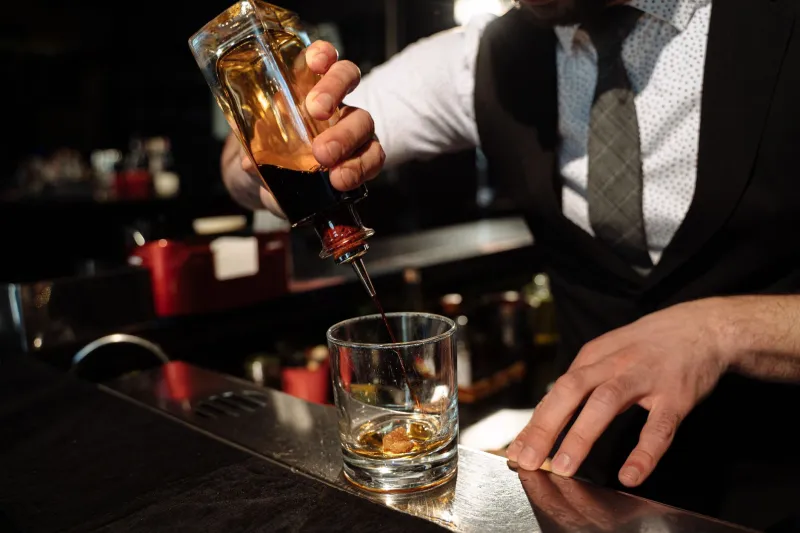
There's a particular kind of bartender you've probably encountered at least once — the one who moves behind the stick with the same deliberate confidence as someone who knows exactly what line to take through a fast corner. Unhurried. Precise. A little bit dangerous in the best possible way. Increasingly, that bartender probably rides.
Across American cocktail culture, a subculture has been developing at the intersection of premium spirits and motorcycle identity. It's not a marketing campaign. It's not a theme bar aesthetic borrowed from a mood board. It's something more organic and more interesting: mixologists who genuinely live the moto lifestyle and are channeling that experience — the freedom, the risk, the mechanical intimacy, the community — into what they build in the glass.
We went deep on this one.
Where the Throttle Meets the Tin
Ask a moto-culture bartender why the two worlds connect so naturally and you tend to get variations on the same answer. Both demand a certain relationship with your hands. Both reward patience and punish sloppiness. Both carry a heritage of outsider identity that has, over decades, become unexpectedly mainstream without losing its essential edge.
"Motorcycles were never supposed to be respectable," says one craft bartender based in Asheville, North Carolina, who rides a modified 1970s Japanese standard and runs a seasonal cocktail menu inspired by regional ride routes. "Neither was craft spirits, honestly. Both things came up from the margins. That's the DNA I'm working with."
That DNA shows up in specific ways. In the choice of base spirits — rye whiskey, mezcal, and aged rum appear constantly in moto-bartender repertoires, spirits with character and smoke and a certain roughness that survives the mixing process. In the names attached to drinks. In the visual presentation, which tends to favor simplicity and directness over fussy garnish architecture. A good moto cocktail looks like it has somewhere to be.
Drinks That Actually Go Somewhere
The naming conventions in this subculture are worth a moment of appreciation. Forget "The Garden Party" and "Sunset Bliss." The moto-inspired cocktail menu leans hard into the mythology of the road.
Here are a few drinks that have been circulating in this community, along with the stories behind them:
The Dead Reckoning — A stirred cocktail built on bonded rye, amaro, and a few dashes of aromatic bitters, finished with an expressed lemon peel. Named for the old navigation technique of estimating your position based on speed and direction without landmarks. "That's how you ride unfamiliar roads," explains the bartender who developed it. "You pay attention to what you know and trust your instincts for the rest."
Gravel Rash — This one's mezcal-forward, built with fresh grapefruit, a float of Campari, and a salted rim that bites back just enough. The name is self-explanatory to anyone who's gone down on loose pavement. It's not a comfortable drink, exactly. It's a drink that reminds you you're alive.
The Iron Mile — A long drink: bourbon, cold brew coffee, a touch of honey syrup, and soda, served over a single large ice cube in a rocks glass. Built for the bartender who has a 6 a.m. ride and a late shift. Caffeinated enough to matter, strong enough to mean something.
Lane Splitter — A mezcal-and-tequila split base with cucumber, lime, and a jalapeño tincture. The point is that it moves between categories — smoky and clean simultaneously — the way a skilled rider moves through traffic. Effortlessly, if you know what you're doing.
These aren't novelty drinks. Tried and refined through actual bar programs, they're designed to be ordered more than once.
The Ethos Behind the Program
What separates the moto bartending movement from mere theming is the underlying philosophy. A theme bar puts motorcycles on the wall. A moto bartender brings motorcycle thinking to the work.
That means sourcing with the same care a rider brings to selecting parts. Many in this community are deeply invested in small-production American spirits — craft distilleries operating with the same bootstrap energy as an independent bike builder. They're seeking out single-barrel releases, regional producers, spirits with a story that connects to place and craft rather than marketing spend.
It also means a certain directness with guests. Moto culture isn't known for pretension, and neither are the bartenders who carry its influence. The drink knowledge is real and deep, but it's delivered without the performance of exclusivity that sometimes plagues high-end cocktail bars. You can ask questions. You'll get straight answers. The vibe is closer to a knowledgeable friend than a gatekeeper.
"I want someone to sit down who's never had mezcal and leave knowing exactly why it's worth caring about," says a Nashville-based bartender who splits her time between a craft cocktail program and leading group rides on weekends. "Same way I want someone to sit on a bike for the first time and feel that thing click. That's the job."
Urban Bars, Rural Roots
Interestingly, the moto cocktail movement is showing up in both contexts. In cities — Nashville, Denver, Portland, Austin, Richmond — it surfaces as cocktail bars with deliberately understated aesthetics, strong whiskey programs, and a staff that's more likely to talk about tire compound than wine pairings. In rural markets, it's appearing in roadhouse-style venues that have upgraded their beverage programs significantly, recognizing that the rider demographic passing through has developed sophisticated tastes.
The rural angle is particularly compelling. Small-town bars along iconic American riding routes are beginning to invest in proper craft spirits programs, partnering with nearby distilleries to offer local pours that connect to the landscape. A rider finishing a day on the Cherohala Skyway or the Extraterrestrial Highway shouldn't have to settle for well bourbon. Increasingly, they don't.
Why It Matters
Cocktail culture and motorcycle culture have both spent decades building identities around the idea that the best things in life require some investment — of time, of attention, of money, of genuine passion. A well-built cocktail and a well-built motorcycle are both the result of decisions made at every stage of the process, none of them accidental.
The bartenders operating in this space understand that instinctively. They're not decorating drinks with chrome accents or naming everything after famous highways for the Instagram caption. They're building a genuine sensibility: one that says the road deserves to be honored when you stop, and that what's in your glass should be as intentional as the route that brought you there.
That sounds like our kind of culture. Pull up a stool.