Wired for the Rush: The Brain Science That Links Riders and Craft Beverage Obsessives
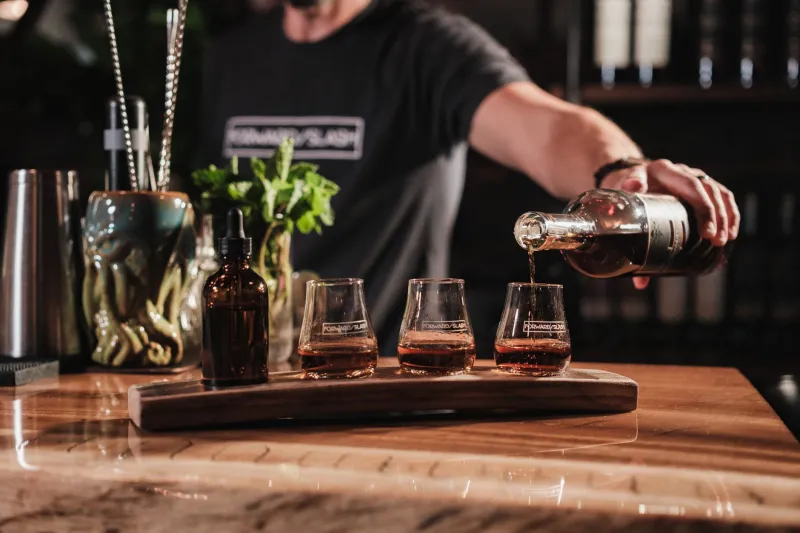
You've probably noticed it before, even if you never put words to it. The rider who spends three weekends chasing the perfect twisty backroad through the Ozarks is the same person who will drive forty-five minutes out of their way to visit a distillery that's only open on Saturdays. The guy who can describe the torque curve of a vintage Triumph Bonneville in loving detail is also the one swirling a glass of rye whiskey and talking about mouthfeel and finish like he's writing liner notes for a jazz album.
This isn't a coincidence. According to behavioral scientists and neuroscientists who study reward-seeking behavior, riders and craft beverage enthusiasts share a surprisingly similar profile — one that's hardwired into the brain's dopamine system. And understanding that connection might just explain why the Bikes & Barrels lifestyle makes so much instinctive sense.
The Dopamine Loop You Didn't Know You Were Running
Dr. Rachel Fenwick, a behavioral neuroscientist based in Nashville who has spent years studying sensation-seeking patterns in adults, puts it plainly: "The anticipation of a novel experience — whether that's a road you've never ridden or a whiskey expression you've never tasted — triggers dopamine release in the brain's reward circuitry before the experience even happens. The seeking itself is pleasurable."
That's the key insight. Dopamine, the neurotransmitter most people associate with pleasure, is actually more accurately described as a molecule of anticipation and motivation. It surges when you're chasing something — a new route, a limited-release bottle, a flavor profile you've never encountered. The brain treats the hunt as its own reward.
For riders, that loop kicks in the moment they pull up a new route on a map app, or hear about a stretch of asphalt in the Blue Ridge that nobody seems to talk about. For craft beverage enthusiasts, it fires when they spot a single-barrel selection they've never seen before, or when a bartender mentions that the brewery down the block just tapped something experimental.
"Thrill-seekers and novelty-seekers are often the same population," Fenwick says. "They just express it through different activities. But the underlying neurological pattern is nearly identical."
Sensation Seeking Has Layers
Psychologists have long studied what's called the "sensation-seeking" personality trait — a concept pioneered by psychologist Marvin Zuckerman in the 1960s. His research identified four components: thrill and adventure seeking, experience seeking, disinhibition, and boredom susceptibility. Riders tend to score high on the first two. So do serious craft beverage enthusiasts, though the expression looks different.
Marcus Delray, a distiller at a small-batch bourbon operation outside Louisville, Kentucky, laughs when this is explained to him. "I used to race motocross," he says. "I got into distilling because I needed something that scratched that same itch — the obsession with getting something exactly right, the satisfaction when it clicks. It's the same feeling, just slower."
That "slower" part matters. Riders get their rush in real-time — lean angles, acceleration, the physical engagement with terrain. Distillers and brewers operate on timelines measured in months or years. But both require the same relentless curiosity, the same willingness to experiment, and the same tolerance for the gap between where you are and where you want to be.
Why Better Riders Make Better Tasters (And the Other Way Around)
Here's where it gets really interesting. The heightened sensory awareness that experienced riders develop — the ability to read road texture through the handlebars, to notice a subtle change in wind direction before it affects the bike — appears to translate directly into sensory acuity in other domains.
"Riding at a high level trains you to process sensory information very quickly and very accurately," says Dr. James Kowalski, a cognitive psychologist who consults with motorsport athletes. "You're essentially running a constant sensory analysis of your environment. That skill doesn't just switch off when you park the bike."
Kowalski has worked with several riders who took up wine and spirits tasting as a hobby and found they had an unusual aptitude for it. "They could isolate flavors faster, describe them more precisely, and detect subtle variations between samples. The sensory training transferred."
On the flip side, serious craft beverage enthusiasts — people who spend real time developing their palates — often describe the practice as meditative and intensely focused. That kind of deliberate attention to sensory detail, when applied to riding, tends to make people more aware, more present, and frankly, more skilled on the bike.
Jessica Tran, a homebrewer from Portland, Oregon, who took up motorcycling three years ago, describes it this way: "Brewing taught me to slow down and pay attention. When I started riding, I realized I was already good at reading subtle cues. It's the same brain doing the same thing."
The Novel Experience as a Shared Currency
There's also a social dimension to all of this that's worth acknowledging. Both motorcycle culture and the craft beverage world are built around the sharing of experiences — the post-ride debrief at the bar, the tasting flight passed around a table, the group ride to a new brewery that someone discovered on Instagram. The dopamine hit of novelty is amplified when it's shared.
"Human beings are fundamentally social reward-seekers," Fenwick explains. "When you experience something new and exciting alongside other people, the social bonding component adds another layer of neurological reinforcement. It's why group rides feel so good, and why tasting rooms become community spaces."
That's not a marketing observation — it's biology. And it explains why events that combine both worlds, motorcycle rallies with craft beer gardens, distillery tours with organized ride-ins, moto lodge weekends with curated tastings, consistently punch above their weight when it comes to the experiences people actually remember and talk about.
So What Do You Do With This Information?
Honestly? Lean into it. If you're a rider who hasn't spent much time developing your palate, consider that the same curiosity and precision you apply to your bike can be pointed directly at a glass of something interesting. Find a local distillery doing something experimental. Hit a craft brewery that's pushing boundaries with adjuncts or barrel programs. Your brain is already set up to appreciate what they're doing.
And if you're a craft beverage obsessive who's never thrown a leg over a motorcycle — well, we're not here to give you riding advice. But we are here to tell you that the same part of your brain that lights up when you crack open a limited-release saison is the same part that lights up when you roll onto an open highway with nowhere specific to be.
The throttle and the tasting glass are just two different handles on the same rush. Ride hard. Drink well. Your brain was built for both.