Above the Clouds, Below the Noise: How Mountain Riding Rewires Your Sense of Taste
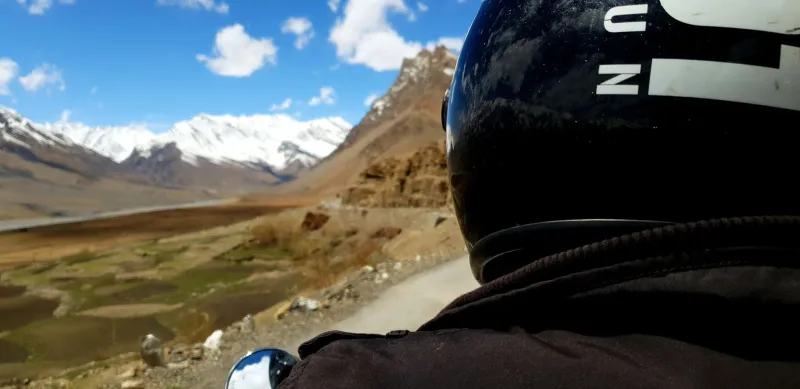
You've done the climb. Switchbacks, thin air, your engine working harder than it has all season. You pull off at a scenic overlook somewhere in the Rockies or along the Blue Ridge, kick the stand, and crack open something cold — or pour something amber from a flask you've been saving since Asheville. And it tastes different. Not just good-different. Revelatory-different.
This isn't nostalgia or road-induced euphoria talking. There's genuine physiology at work here, and once you understand it, you'll never plan a mountain route the same way again.
What Altitude Actually Does to Your Body (And Your Palate)
At sea level, you're operating in a comfortable, oxygen-rich environment where your senses run on autopilot. Climb above 5,000 feet, and things start to shift. The air pressure drops. Humidity falls. Your nasal passages dry out faster than you'd expect, and the mucous membranes that support your olfactory receptors lose some of their effectiveness.
Here's the kicker: roughly 80 percent of what we call "taste" is actually smell. Your tongue can detect sweet, salty, sour, bitter, and umami — but the nuanced complexity you associate with a well-crafted IPA or a high-rye bourbon? That comes from your nose doing the heavy lifting.
So when altitude dries out your nasal passages, you'd think flavor would diminish. And in some ways, it does — particularly for subtle aromatics. But the counterintuitive part is that your brain, suddenly working harder to process sensory input in a lower-oxygen environment, tends to amplify the signals it does receive. Flavors that penetrate don't just register — they announce themselves.
"There's a reason high-altitude tasting rooms have become a thing in Colorado wine country," says Denver-based beverage consultant Marcus Frey, who leads motorcycle and spirits tours through the San Juan Mountains each summer. "People always comment that things taste bolder up there. Tannins seem more pronounced, sweetness reads differently, and bitterness can get more intense. It's not the drink changing — it's you."
The Dry Air Factor and Why It Matters for Craft Beer
Beer drinkers on mountain rides tend to notice the effect most dramatically. Carbonation behaves differently at elevation — bubbles release faster, which means hop aromatics volatilize more quickly and hit your nose in a compressed burst rather than a slow unfurl. That hazy New England IPA you packed from a Fort Collins brewery? At 9,000 feet, the tropical fruit notes might seem almost aggressive compared to how they tasted in the taproom.
Rider and homebrewer Tasha Mendes, who regularly runs the Peak to Peak Highway in Colorado on her Triumph Tiger, puts it simply: "I started keeping a tasting journal specifically for mountain rides. The same beer at altitude versus back in Denver — I write them up like two different beers. Up high, I get more bitterness, more citrus sharpness. It's not unpleasant, it's just louder."
For practical purposes, this means lighter, more delicately crafted beers — your pilsners, your session lagers — can actually shine at elevation because the amplification effect brings out character that might get lost at lower altitudes. Bold, heavily hopped double IPAs, on the other hand, can tip toward overwhelming. Plan your cooler accordingly.
Whiskey, Thin Air, and the Art of the Mountain Flask
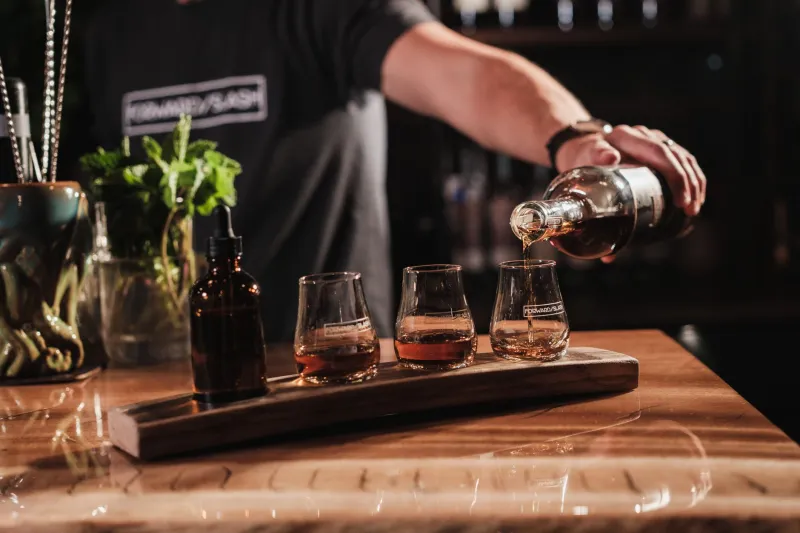
Spirits behave differently up high for a different set of reasons. Ethanol is more volatile at lower atmospheric pressure, meaning the alcohol vapor rises off the surface of your pour more aggressively. For novice tasters, this can make whiskey seem harsh at first nosing — all heat and very little else. But give it a moment. Let the ethanol blow off, and what's underneath often emerges with unusual clarity.
Frey describes pouring a single-barrel Tennessee rye for a group at a rest stop above Monarch Pass last fall. "Everybody's first reaction was 'whoa, that's sharp.' But thirty seconds later, people were picking up vanilla, dried cherry, baking spice — things they'd never noticed in that same bottle back home. The altitude strips away some of the softening effect that humidity and pressure normally provide. You get the raw architecture of the spirit."
If you're packing a flask for a high-elevation run, consider going with something that has genuine depth — a well-aged bourbon, an American single malt, or a quality rye. Blended whiskeys designed for easy drinking can taste one-dimensional when the altitude strips their cushioning. Complexity rewards you up there.
Practical Tips for Maximizing Your Mountain Tasting Experience
Hydrate aggressively before your first sip. Altitude dehydration hits fast, and a dry mouth will distort everything you taste. Drink water consistently through your climb, not just when you're thirsty.
Let your spirits breathe longer than usual. Add a few extra minutes to your standard nosing routine. The aggressive ethanol volatilization at altitude means patience pays off in layers of flavor you'd otherwise miss.
Go lighter on carbonation earlier in the ride. Save the big, carbonated craft beers for your first stop after descending. At peak elevation, a still cider, a low-carbonation farmhouse ale, or a neat spirit will give you a cleaner tasting experience.
Nose before you sip. At altitude, your olfactory system is working harder but processing differently. Take time to smell your pour deliberately — cup your hand over the glass, trap the aromatics, and inhale slowly. You'll catch things that a casual sniff would miss.
Keep notes. Seriously. Tasting the same bottle at sea level and then again at 8,000 feet is one of the more genuinely surprising experiments you can run as a rider and a beverage enthusiast. The difference will make you rethink everything you thought you knew about your go-to drink.
The Routes Worth Planning Around
If you're specifically chasing the altitude-taste phenomenon, a few American routes stand out. Colorado's Trail Ridge Road through Rocky Mountain National Park crests above 12,000 feet — there are pull-offs with views that demand a proper pour. The Beartooth Highway between Red Lodge, Montana, and the northeast entrance of Yellowstone regularly shows up on best-roads-in-America lists and tops out near 11,000 feet. And New Mexico's Enchanted Circle, looping through Taos and Eagle Nest, offers sustained high-altitude riding with craft brewery access at both ends.
The point isn't just to ride high and drink something. It's to pay attention — to what your senses are doing, how they're shifting, and what the combination of machine, mountain, and craft beverage is actually producing in real time.
Because that's the thing about riding at altitude. Everything is amplified. The view. The sound of your engine fighting thinner air. The cold coming off the peaks. And yeah — whatever's in your glass when you finally stop and look out at the world from the top of something real.
Ride hard. Taste everything.