Throttle Therapy: The Natural Tonics and Botanicals Keeping Long-Distance Riders in Fighting Shape
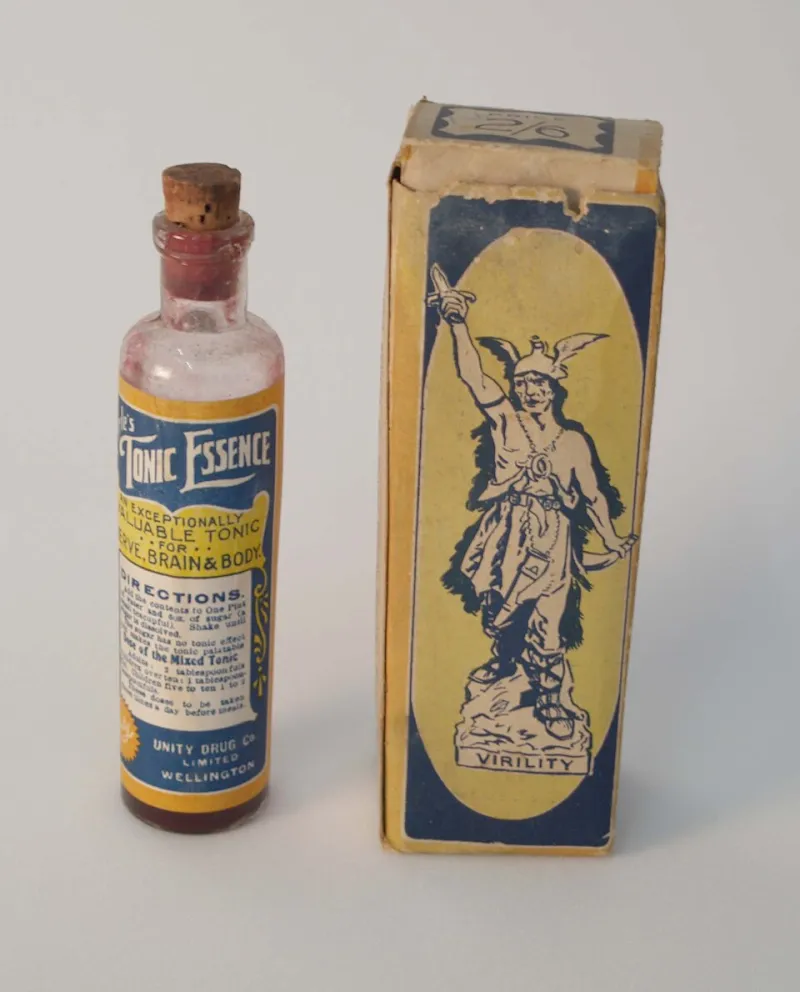
Photo: Unity Drug Co, CC BY 4.0, via Wikimedia Commons
Anybody who's logged 600 miles in a single day knows the feeling. You swing a leg off the bike, plant both feet on the ground, and for a solid three seconds, your lower back files a formal complaint. Your wrists ache. Your knees feel like they've been packed in gravel. You're not injured — you're just a rider. And this is just Tuesday.
For generations, the standard recovery protocol looked something like this: a cold beer, a hot shower, and a good night's sleep. Nothing wrong with any of that. But a quieter movement has been building along the edges of moto culture, one that's finding its way into saddlebags, garage refrigerators, and post-ride rituals across the country. Riders are getting serious about botanicals — adaptogens, anti-inflammatory herbs, and small-batch functional tonics that promise to do more than just taste good.
The question worth asking: what actually works, and what's just clever marketing in a brown glass bottle?
Why Riders' Bodies Take a Beating
Long-distance riding is deceptively physical. You're not pedaling, sure, but you're holding a sustained isometric position for hours, absorbing road vibration through your hands and seat, bracing against wind resistance, and making constant micro-adjustments with your core. Sports medicine practitioners who work with endurance athletes often compare the physical profile of a long-haul rider to that of a competitive rower — high static load, repetitive micro-stress, and chronic vibration exposure that accumulates quietly over time.
The most common complaints are predictable: lower back stiffness, wrist and hand inflammation, knee soreness from peg positioning, and general fatigue that goes deeper than just being tired. Sleep doesn't always fix it. Ibuprofen handles it for a while, but riders who are out there every weekend start to look for something more sustainable.
That's where the world of herbal medicine and craft beverage start to overlap in genuinely interesting ways.
Adaptogens: The Word You're Hearing Everywhere
If you've spent any time in a natural food store or scrolled through a wellness-adjacent Instagram account, you've seen the word adaptogen used to describe everything from mushroom coffee to overpriced chocolate bars. The hype is real, but so is the underlying science — to a point.
Adaptogens are a class of herbs and fungi that help the body regulate its stress response. The most studied include ashwagandha, rhodiola rosea, eleuthero (sometimes called Siberian ginseng), and lion's mane mushroom. Research suggests these compounds can help reduce cortisol levels, support cognitive function under fatigue, and improve physical endurance recovery — all things a rider who just hammered through the Ozarks in August genuinely needs.
Ashwagandha in particular has earned serious scientific attention. Multiple peer-reviewed studies have shown it can reduce markers of physical stress and improve recovery time in active adults. Rhodiola has a long history in Eastern European athletic medicine as a fatigue fighter. These aren't folk tales — they're compounds with real pharmacological activity.
What they are not is magic. Dosage matters enormously, delivery method matters, and the quality of the source material matters most of all. A tonic with "ashwagandha" listed tenth on its ingredient deck isn't going to do much for your lower back. This is where craft producers are starting to separate themselves from the mass-market noise.
Small-Batch Makers Who Actually Get It
Out of Portland, Oregon, a small operation called Trail & Tincture has been quietly building a following among the Pacific Northwest riding community. Their flagship product is a non-alcoholic sparkling tonic built around turmeric, black pepper (which dramatically increases turmeric absorption), ginger root, and a meaningful dose of ashwagandha. It's formulated specifically for post-activity recovery and tastes, according to most people who've tried it, like a grown-up ginger beer with some serious backbone.
The founder, a former adventure touring rider named Cassie Wren, started developing the recipe after a multi-day trip through the Cascades left her with inflammation so bad she could barely grip a coffee mug the next morning. "I wanted something I could actually drink at the end of a ride that wasn't going to knock me sideways," she says. "Something that tasted good and did something. That combination barely existed."
Down in Asheville, North Carolina — a city that's become something of a craft beverage laboratory for the Southeast — a small distillery called Blue Ridge Bitters Co. has been making alcohol-based botanical bitters and tinctures that have found a devoted audience among the riding community that passes through on the Blue Ridge Parkway. Their "Road Recovery" blend leans heavily on devil's claw root (a traditional anti-inflammatory), willow bark, and ginger, with a small-batch apple cider vinegar base. A few dashes in sparkling water, or stirred into a low-ABV cocktail, and you've got something that's both genuinely pleasant and functionally relevant.
"The motorcycle crowd found us almost by accident," says the distillery's head of product development, Marcus Tillman. "But once they did, they became our most loyal customers. Riders are already used to paying attention to what they put in their machines. It didn't take much convincing to get them thinking the same way about what they put in their bodies."
The Anti-Inflammatory Kitchen: What to Look For
If you want to build your own post-ride recovery routine using botanical ingredients, the research points to a handful of heavy hitters worth knowing:
Turmeric + Black Pepper — The combination is well-documented for reducing systemic inflammation. Look for products that specifically include piperine (the active compound in black pepper) because without it, turmeric's curcumin passes through largely unabsorbed.
Ginger Root — A genuine anti-inflammatory with a long history of use for joint pain and muscle soreness. Works well as a fresh tea, a tincture, or a mixer in non-alcoholic drinks.
Tart Cherry Extract — Less glamorous than exotic botanicals, but the research on tart cherry for muscle recovery is some of the strongest in the natural medicine literature. Athletes have been using it for years. Riders are catching on.
Magnesium — Not a botanical, but worth mentioning because most American adults are deficient and it plays a major role in muscle function and sleep quality. Many functional beverage makers are starting to include it.
CBD — The conversation around CBD for inflammation and pain is complicated. The anecdotal evidence from the riding community is strong; the clinical research is still catching up. Quality and dosage vary wildly, so if you go this route, buy from brands that publish third-party lab results.
Marketing Hype vs. Real Results
Not everything in a pretty bottle earns its price tag. A few rules of thumb when evaluating a botanical tonic or functional beverage:
Read the full ingredient list. If the herb you're buying it for appears near the bottom, after flavoring agents and sweeteners, you're mostly buying a flavored drink. Look for products that list therapeutic ingredients prominently and ideally specify dosage.
Be skeptical of proprietary blends that hide individual amounts. Legitimate functional beverage makers tend to be transparent about what's in their products and why.
Price is a rough proxy for quality. Genuine botanical extracts at meaningful doses aren't cheap. If a tonic costs the same as a soda, it's probably performing about as well as one.
And maybe most importantly — no tonic, adaptogen, or herbal formula replaces sleep, hydration, and basic physical maintenance. Think of these products as intelligent additions to a recovery routine, not replacements for one.
The Ritual Matters Too
There's something worth acknowledging beyond the biochemistry. Part of what makes a post-ride recovery tonic work is the ritual itself — the deliberate act of stopping, sitting down, and doing something intentional for your body after hours of focused riding. That mental shift, from throttle-on to throttle-off, is part of the recovery.
Craft beverage culture already understands this. The reason a tasting room feels different from a gas station convenience store isn't just the quality of what's in the glass. It's the invitation to slow down and pay attention.
Riders who are building botanical recovery routines are, whether they think about it that way or not, doing exactly the same thing. Paying attention. Taking the long view. Treating the machine that carries them with the same care they give the one they ride.
That's not a wellness trend. That's just good sense.